Statistical Patterns in Referee Appointments Across Major European Football Leagues
Logan Schmitz · Aug 13, 2026

Statistical Patterns in Referee Appointments Across Major European Football Leagues
Referee assignment histories compile detailed records of officials selected for matches in leagues such as the Premier League, La Liga, Bundesliga, Serie A, and Ligue 1, and these datasets track metrics including cards issued, penalties awarded, and fouls called over multiple seasons. Analysts examine these patterns because appointment decisions often follow criteria established by national federations and UEFA, while performance data from past fixtures provides measurable indicators for upcoming games. In August 2026 the new campaign will begin with fresh rotations that reflect both continuity and adjustments based on prior evaluations.
Core Metrics Derived from Appointment Records
Leagues maintain centralized databases that log every referee's output across home and away fixtures, and researchers aggregate these figures to identify tendencies such as higher average yellow cards in matches involving specific teams or elevated penalty rates during evening kickoffs. Data from the 2024-2025 season showed Bundesliga officials averaging 4.8 yellow cards per game compared with 5.3 in Serie A, while penalty awards ranged from 0.28 per match in the Bundesliga to 0.41 in La Liga according to reports compiled by the International Centre for Sports Studies. Such differences arise because appointment panels consider travel distances, recent form, and disciplinary records when assigning officials to fixtures.
Those who review assignment histories also note correlations between referee experience levels and stoppage time distributions, and longer-serving officials tend to add fewer minutes in the second half when matches remain close. UEFA publishes annual technical reports that detail these variables across its member associations, allowing performance analysts to cross-reference domestic league data with European competition outcomes. The resulting comparisons highlight how referee styles shift when officials move between domestic and continental assignments.
Geographic and Seasonal Variations in Official Selections
Appointment committees in different countries apply distinct weighting to factors like physical fitness tests and video review accuracy, which produces observable regional signatures in the data. German officials, for instance, issue fewer red cards on average than their Spanish counterparts during equivalent stages of the season, while Italian referees record higher foul counts in the opening ten minutes of matches. These patterns persist across multiple years because selection criteria remain relatively stable even as individual officials retire or advance.
Seasonal shifts appear when mid-season breaks or international windows alter the pool of available referees, and leagues respond by reallocating fixtures to maintain consistency. August 2026 will mark the start of such a cycle, with early fixtures often featuring officials who demonstrated strong disciplinary control in the previous campaign's closing months. Observers track these rotations because they influence the baseline expectations for card totals and set-piece decisions.
Integration with Team Performance Data
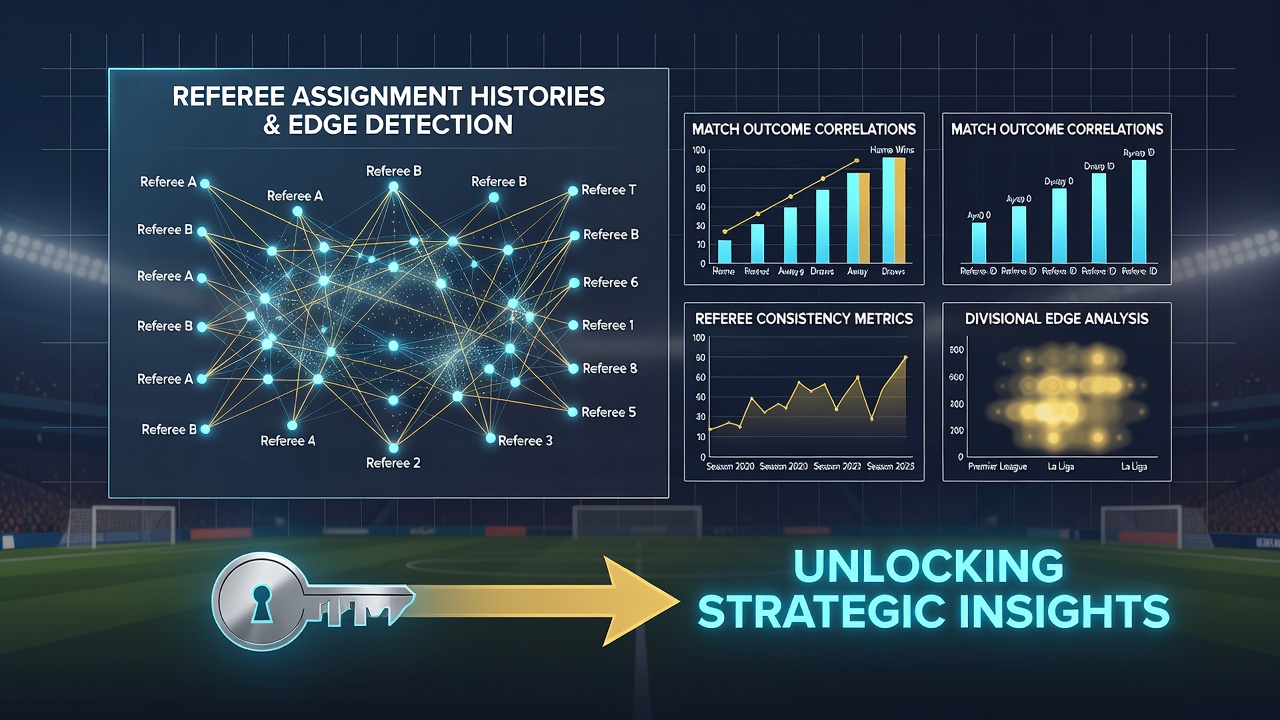
Statistical models combine referee histories with team-specific metrics such as average fouls committed and shots conceded inside the penalty area, and the merged datasets allow for more granular projections of match events. One study published in the Journal of Sports Sciences examined 2,400 matches across five leagues and found that certain referee-team pairings produced statistically significant deviations in card rates compared with league averages. Those deviations remained consistent when the same officials were reassigned to the same clubs in subsequent seasons.
National federations share anonymized portions of their assignment databases with academic researchers, and the resulting papers appear in peer-reviewed outlets that focus on sports analytics. Cross-referencing these findings with publicly available match reports enables independent verification of trends without relying on proprietary league systems. The process reveals that referee fatigue, measured by consecutive high-intensity fixtures, correlates with slight increases in stoppage time during the final fifteen minutes.
Technological Tools Supporting Historical Analysis
Modern platforms ingest referee assignment feeds directly from league sources and apply machine learning layers to detect anomalies or emerging patterns, while visualization dashboards display card rates, penalty distributions, and foul locations filtered by official and venue. These tools operate on data spanning at least five seasons, which provides sufficient sample sizes for confidence intervals around observed averages. European governing bodies have encouraged wider adoption of such systems to improve transparency in the appointment process.
August 2026 assignments will feed into these same platforms immediately after each matchday, updating rolling averages that analysts monitor for deviations. The continuous refresh cycle supports ongoing calibration of models that account for changes in playing styles or squad compositions across the divisions.
Conclusion
Referee assignment histories constitute structured datasets that leagues and researchers use to quantify officiating tendencies across top European divisions, and the patterns extracted from these records intersect with team performance indicators to produce measurable projections. As the 2026-2027 season opens, updated appointment information will continue to populate the same analytical frameworks that have tracked trends through prior campaigns. The availability of consistent, longitudinal data from multiple federations supports comparative studies that span geographic boundaries and competitive contexts.