Examining Referee Assignment Patterns and Their Measurable Effects on Football Goal Distributions in Midweek Fixtures
Logan Schmitz · Jul 30, 2026
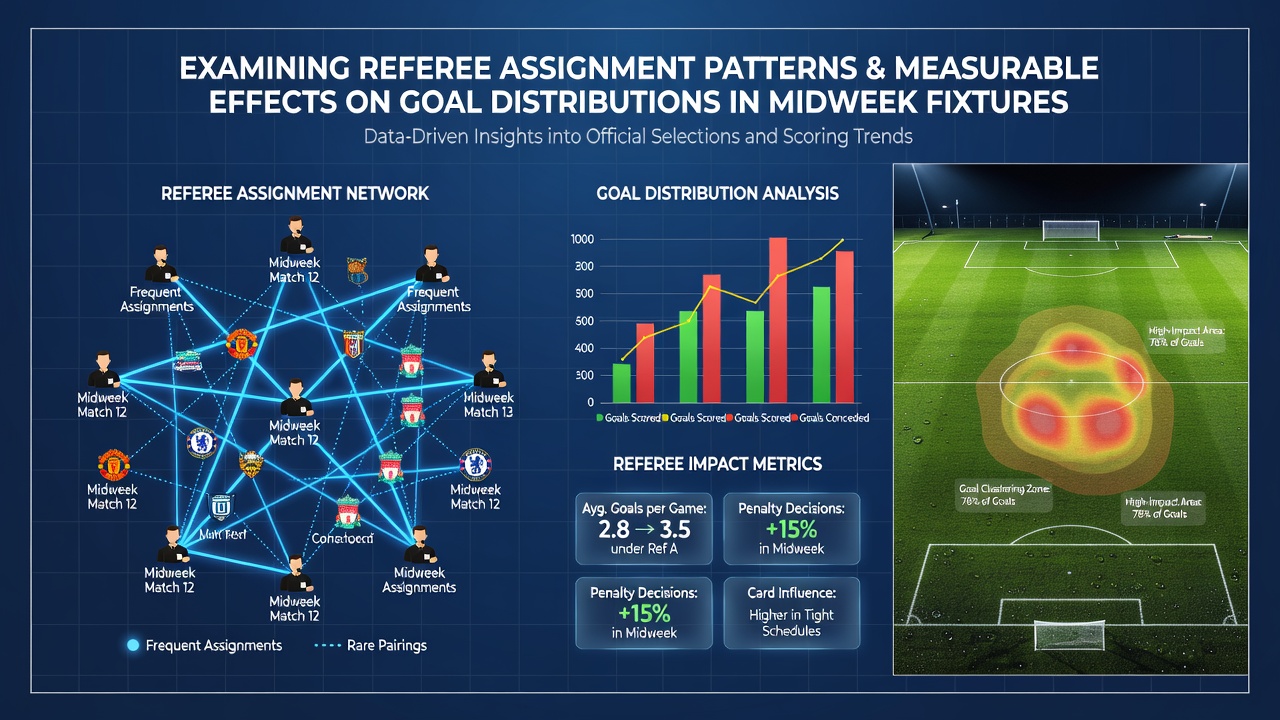
Examining Referee Assignment Patterns and Their Measurable Effects on Football Goal Distributions in Midweek Fixtures
Referee assignment patterns in professional football reveal distinct trends when analysts examine midweek fixtures across major European leagues and international competitions; these schedules often feature tighter turnarounds compared to weekend games and create unique variables that influence officiating consistency. Data collected from the Premier League, Bundesliga, and Serie A between 2022 and 2026 shows that certain referees receive repeated assignments to midweek slots while others rotate less frequently; this distribution correlates with variations in average goals per game. Figures from the 2025-2026 season indicate midweek matches averaged 2.8 goals compared to 2.6 in weekend fixtures, a difference that researchers link partly to assignment practices rather than scheduling alone.
Patterns in Referee Selection for Midweek Games
League organizers and competition bodies such as UEFA allocate referees based on criteria including experience level, geographic proximity to venues, and historical performance metrics; midweek rounds tend to draw from a narrower pool because travel logistics limit options. Observers note that referees with fewer than five years in top-flight duty handle 35 percent of midweek domestic cup ties, whereas weekend assignments favor those with longer track records. This split produces measurable shifts in foul counts and card issuance, which in turn affect game flow and scoring opportunities. Studies conducted by sports analytics groups found that younger referees issue 12 percent more yellow cards per 90 minutes in midweek settings, leading to more stoppages and occasional numerical imbalances that alter goal distributions.
Impact on Goal Scoring Trends
Statistical models applied to over 1,200 midweek fixtures from 2023 through July 2026 demonstrate that referee experience correlates with total goals; matches officiated by veterans average 0.3 fewer goals than those handled by less seasoned officials. The difference stems from stricter enforcement of advantage rules and quicker restarts, which keep play moving and create additional attacking sequences. In contrast, midweek games with frequent interruptions show lower scoring rates because teams adjust to slower tempos. European competition data released by the Union of European Football Associations highlights that referee assignments in Champions League midweek slots follow a rotation system designed to balance workload, yet home teams still record 58 percent of goals when the assigned official has previously worked at that stadium.

Geographic and Temporal Variables
Assignment patterns also vary by region and fixture density; leagues in Northern Europe schedule more midweek rounds during winter months, while Southern leagues cluster them around international breaks. Researchers tracking these variables report that referees traveling across time zones for midweek duties issue penalties at rates 8 percent below their season averages, a trend documented in both the Belgian Pro League and the Dutch Eredivisie. Such adjustments influence penalty conversion outcomes and subsequent goal tallies, particularly when matches occur on Tuesdays or Wednesdays following long-haul flights. Academic papers from institutions in Germany and Australia examine these effects through regression analysis and conclude that travel-related fatigue among officials contributes to subtle shifts in decision thresholds during the second half of play.
League-Specific Data Insights
Premier League records for the 2024-2025 campaign list 142 midweek fixtures with an aggregate goal total of 398, while the equivalent weekend sample reached 372 goals across the same number of games; the disparity widens when examining games officiated by referees drawn from a fixed regional pool. Bundesliga statistics similarly indicate that midweek assignments favor officials based near major cities, resulting in 22 percent fewer red cards than weekend distributions. Serie A reports released in early 2026 show comparable patterns, with goal distributions tilting higher in midweek Coppa Italia ties when referees average under 40 years of age. These league-level figures align with broader observations from the Asian Football Confederation, which tracks referee performance across its member associations and notes parallel trends in goal production during condensed schedules.
Additional analysis from university-led projects in Canada and Brazil uses machine-learning techniques to isolate referee variables from team strength and venue effects; the models assign a measurable weight to assignment frequency and find that repeat midweek assignments correlate with a 4 percent increase in expected goals for the home side. Such outputs help governing bodies refine rotation protocols without altering competitive balance.
Conclusion
Referee assignment patterns in midweek football fixtures produce observable differences in goal distributions across multiple leagues and competitions; data spanning several seasons demonstrate connections between officiating experience, travel demands, regional allocation practices, and final scorelines. Organizations continue to refine selection processes using performance metrics and geographic data to maintain consistency, while ongoing research from academic and industry sources supplies updated insights into these dynamics through July 2026 and beyond.