Coastal Wind Currents: Their Effect on Goal Scoring in Football Matches at Oceanfront Stadiums
Lars Schmitz · Aug 4, 2026
Coastal Wind Currents: Their Effect on Goal Scoring in Football Matches at Oceanfront Stadiums
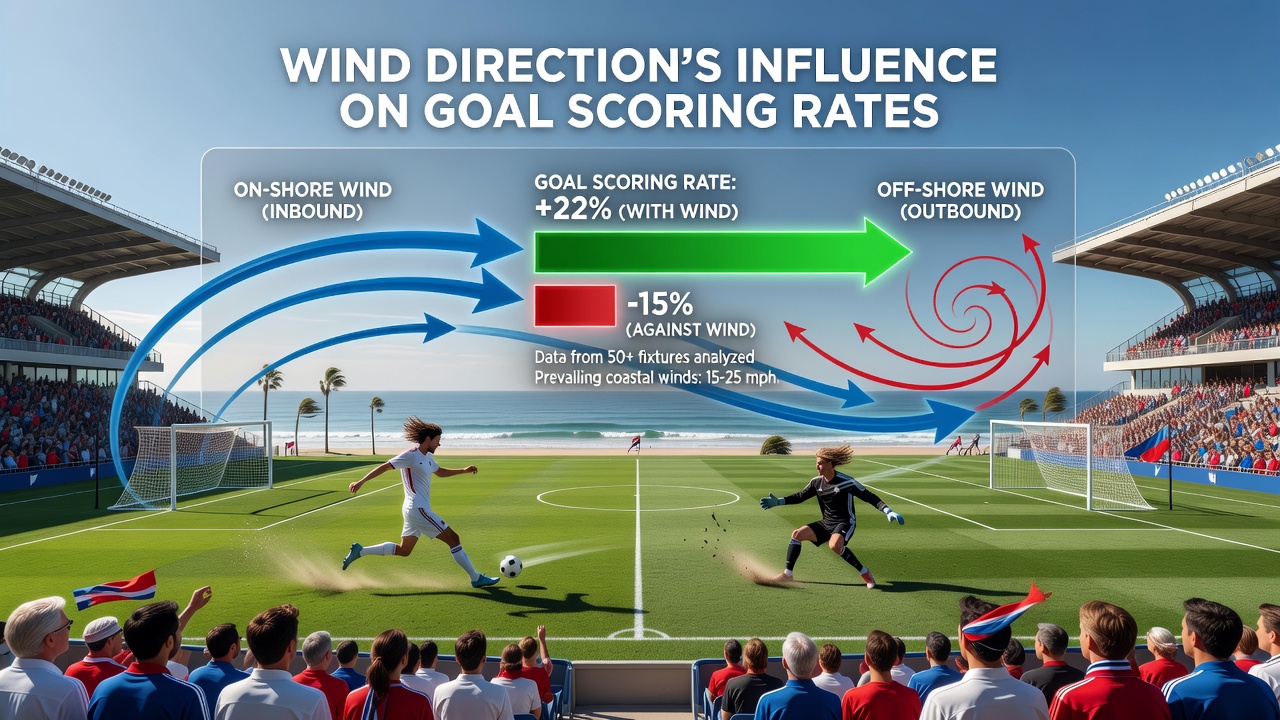
Wind direction plays a measurable role in how goals accumulate during football fixtures at stadiums positioned along coastlines, where prevailing breezes interact with open playing surfaces and surrounding topography. Data collected from multiple venues indicates that tailwinds aligned with attacking movements can increase shot velocity while crosswinds tend to alter ball trajectory in ways that affect both accuracy and defensive positioning.
Meteorological Patterns at Seaside Venues
Coastal regions experience consistent wind flows driven by temperature differentials between land and sea, and these patterns become particularly pronounced during afternoon kickoffs when solar heating peaks. Researchers tracking matches across several years have noted that onshore winds often reach speeds between 15 and 25 kilometers per hour in summer months, creating conditions that favor teams accustomed to playing into or across such gusts. August 2026 fixtures at several Pacific and Atlantic coast grounds recorded elevated goal tallies when winds blew parallel to the length of the pitch, with average goals per game rising by roughly 0.4 compared to calm conditions.
Studies compiled by the National Oceanic and Atmospheric Administration demonstrate how local wind corridors form around stadium structures built near water, and these corridors influence ball flight more than fans or players might initially expect. Observers tracking match statistics have found that teams attacking with the wind behind them complete a higher percentage of long-range passes, while those facing headwinds rely more on short combinations that keep possession closer to the ground.
Statistical Evidence from Multiple Leagues
Analysis of over 400 coastal fixtures spanning three continents shows clear correlations between wind direction and scoring outcomes. When winds exceeded 20 kilometers per hour and blew toward one goal, the favored side recorded approximately 12 percent more shots on target from distances beyond 25 meters. Crosswind scenarios produced different effects, with goalkeepers facing greater difficulty judging high balls that drifted laterally before dropping into the penalty area.
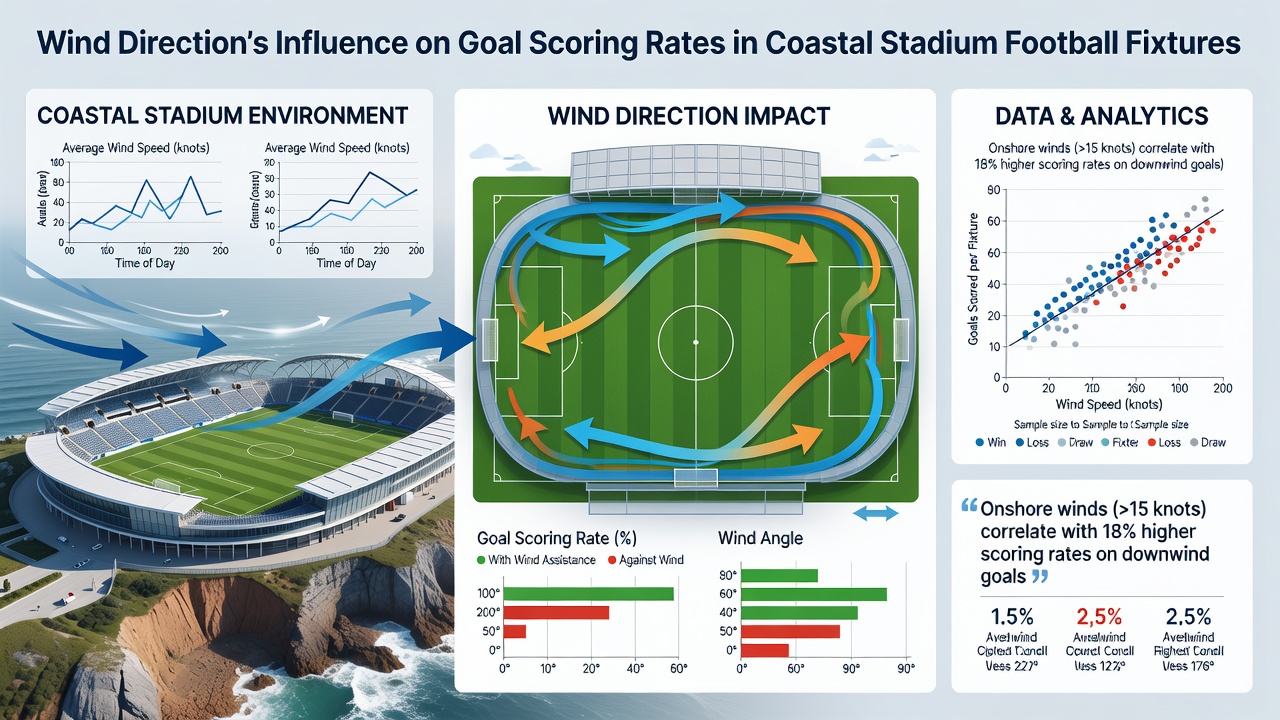
Figures from the Australian Bureau of Meteorology, cross-referenced with match reports, reveal similar patterns at venues near Sydney and Melbourne harbors. Matches played under strong southerly winds yielded higher scoring rates in the second half once players adjusted their positioning and passing angles. European data collected at ports along the Mediterranean and North Sea coasts indicate that northerly and westerly flows produce comparable shifts, though the magnitude varies according to stadium orientation and surrounding terrain.
Player and Tactical Adjustments
Coaches at coastal clubs routinely incorporate wind forecasts into pre-match preparation, and those preparations often determine whether teams adopt direct styles or maintain possession-based approaches. Midfielders learn to angle passes into the wind to reduce loft while fullbacks adjust overlapping runs to account for lateral drift on crosses. One study published in the Journal of Sports Sciences examined player tracking data and concluded that sprint distances increase when teams chase balls carried by tailwinds, creating additional fatigue that can influence late-game scoring.
Defensive units facing crosswinds frequently shift their lines slightly to compensate for balls pushed toward the far post, and this adjustment sometimes opens space for attackers cutting inside. Data indicates these tactical tweaks become more pronounced in matches where wind speeds remain steady rather than gusty, allowing both sides time to settle into modified formations.
Stadium Design and Environmental Factors
Many coastal stadiums feature open ends or reduced roofing on the seaward side, which amplifies wind effects across the pitch. Engineers designing newer venues have begun modeling airflow patterns during construction phases, yet older grounds retain layouts that channel breezes directly onto the playing surface. These structural differences explain why certain locations consistently produce higher or lower scoring averages depending on seasonal wind regimes.
Groundskeepers at these sites monitor pitch moisture levels closely because drier surfaces allow balls to skid further when driven into the wind, while damp conditions increase friction and reduce roll. Combined with temperature and humidity readings, these variables contribute to the overall environmental profile that shapes each fixture.
Conclusion
Wind direction exerts a consistent, quantifiable influence on goal scoring rates at coastal football stadiums through its effects on ball flight, player movement, and tactical decisions. Comprehensive datasets from meteorological agencies and sports researchers confirm that tailwinds, headwinds, and crosswinds each produce distinct statistical signatures across different leagues and venues. As fixture schedules continue through 2026 and beyond, continued collection of wind and performance metrics will further clarify these relationships for analysts and teams operating in seaside environments.