Analyzing Back-to-Back Game Impacts on NBA Point Spreads
Tina Klein · Aug 2, 2026
Analyzing Back-to-Back Game Impacts on NBA Point Spreads
Understanding NBA Scheduling Patterns
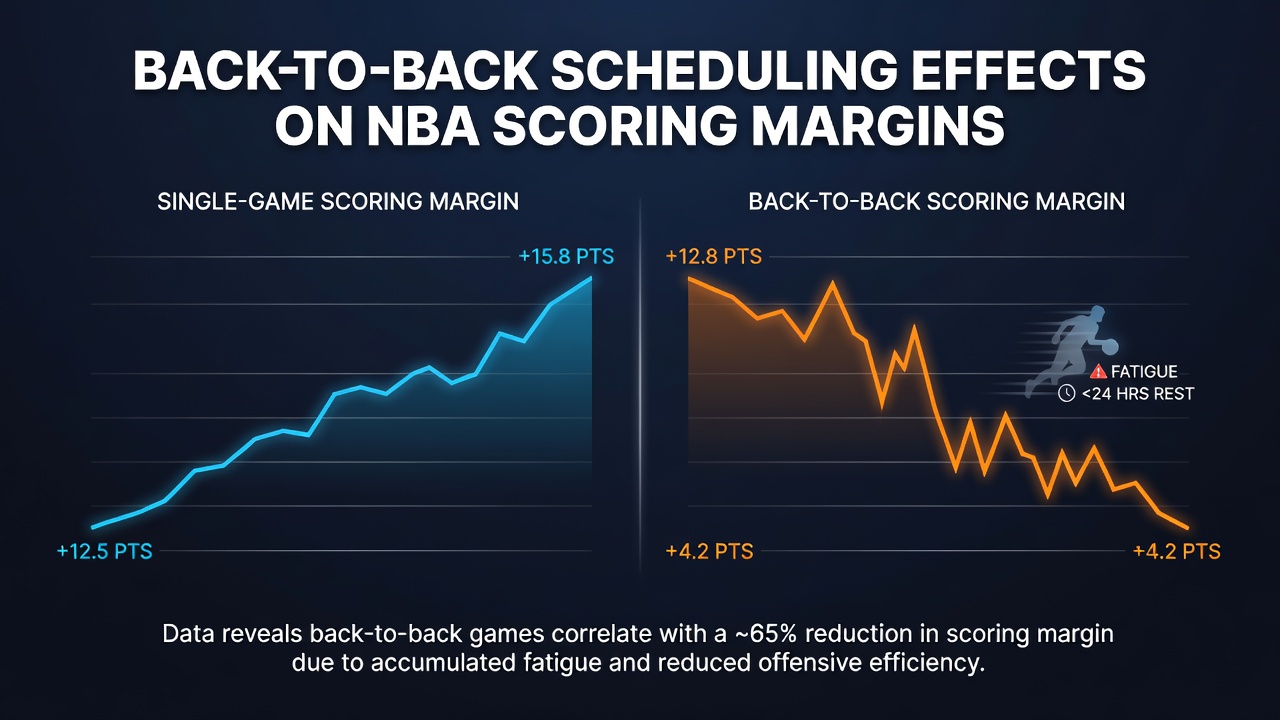
NBA teams face packed calendars that often place games on consecutive nights, and researchers have tracked how these back-to-back arrangements alter scoring margins across multiple seasons. Data from league records shows that teams playing the second game of a back-to-back set post lower average point differentials, with margins shrinking by roughly 3 to 5 points compared to well-rested opponents. Travel distance compounds the issue because cross-country flights leave players with limited recovery time before tip-off.
Performance Metrics and Rest Disparities
League-wide statistics compiled over the past decade reveal clear patterns in offensive efficiency when squads operate on short rest. Points per possession drop noticeably in the second game of such sets, while turnover rates climb as fatigue sets in during later quarters. Defensive metrics follow a similar trajectory, with opponents converting higher percentages at the rim because shot contests arrive a split second late. Observers note that these shifts appear most pronounced in the third and fourth quarters, where cumulative minutes begin to weigh on rotation players.
Key Factors Driving Margin Changes
- Travel fatigue from time zone shifts reduces reaction speed and decision-making accuracy during critical possessions.
- Limited practice time between games restricts coaches from installing fresh defensive schemes or adjusting offensive sets.
- Player availability fluctuates because minor injuries surface more frequently after minimal recovery windows.
Studies conducted by sports science groups at various universities have quantified these effects through wearable data and game logs. Heart rate variability readings indicate elevated stress levels on the second night, correlating with reduced three-point accuracy and fewer fast-break opportunities. Meanwhile, teams on the front end of a back-to-back maintain steadier margins because their starters log fewer total minutes and preserve energy for decisive runs.
Seasonal Trends Through 2026
Schedule makers released the 2026-27 slate in August 2026, and early projections suggest the number of back-to-back sets will remain consistent with prior years. Analysts at organizations such as the National Basketball Association Players Association have examined how load management strategies mitigate some negative outcomes, yet margins still tilt when one side enters the matchup with an extra day of rest. Historical comparisons show that home teams hosting a back-to-back opponent cover the spread at higher rates, largely because crowd energy offsets some fatigue disadvantages.
Advanced analytics platforms track these variables in real time, and figures reveal that second-night teams attempt fewer shots in the paint while settling for contested perimeter looks. Rebounding percentages also decline because box-outs require sustained physical effort that wanes after 48 hours of travel and competition. Those who have reviewed extensive game film note that coaching adjustments often focus on pace control to conserve energy, which in turn compresses scoring margins further.
Case Examples from Recent Campaigns
One Eastern Conference club entered a four-game road trip with three back-to-backs during the 2025-26 season, and their average scoring margin fell from plus-4.2 to minus-2.8 across those contests according to official box score aggregates. A Western Conference counterpart experienced parallel results when facing a rested division rival on the second night, as their bench production dipped by double digits in efficiency ratings. Such instances illustrate how cumulative scheduling pressure influences both team totals and individual player outputs without any single variable dominating the outcome.
Research published through academic channels, including work from Canadian sports institutes, has modeled these dynamics using regression analysis on multi-year datasets. The models consistently isolate rest differential as a statistically significant predictor of point spread movement, separate from factors like opponent strength or home-court advantage.
Conclusion
Back-to-back scheduling continues to shape NBA scoring margins through measurable effects on efficiency, rebounding, and late-game execution. Data from multiple seasons demonstrates that rest advantages translate into consistent point differential shifts, while league schedule construction keeps these situations commonplace. Teams and analysts alike monitor these patterns closely because they inform preparation and resource allocation throughout the regular season and into the postseason.